
In the modern business landscape, identifying your target customer is the foundational step for any successful marketing strategy. A target customer refers to the specific group of individuals or businesses most likely to purchase your products or services. These people share common characteristics such as age, location, income, or specific interests that align with the value proposition of your brand. Without a clear understanding of who this target customer is, businesses often waste significant resources on broad marketing campaigns that fail to resonate with anyone in particular. By narrowing your focus, you can tailor your messaging to address the specific needs and pain points of your ideal target customer, leading to higher conversion rates and better brand loyalty. This article provides a comprehensive guide on how to identify, segment, and reach your target customer to ensure long-term business growth.
Understanding the basic concept of a target customer

The concept of a target customer goes beyond just knowing who might buy your product. It involves a deep analysis of the people who find the most value in what you offer. When a company understands its target customer, it can create products that solve real problems and marketing messages that speak directly to the hearts of its audience. This group is often defined by a combination of demographic, geographic, and psychographic data. For example, a luxury car brand does not try to sell to everyone; instead, its target customer is likely a high-income individual who values status and performance. By focusing on this specific group, the brand can maintain its premium image and achieve better sales results.
Defining the target audience versus the target customer
While the terms are often used interchangeably, there is a slight difference between a target audience and a target customer. The target customer is the person who ultimately buys the product. The target audience is the group of people to whom a specific advertisement or marketing campaign is directed. Sometimes, the person buying the product is not the same as the one using it. For instance, in the case of children’s toys, the target customer is the parent who makes the purchase, while the target audience for a fun television commercial might be the child who influences the parent. Understanding this distinction helps businesses refine their target customer profile to ensure they are reaching the decision-makers effectively.
The role of market research in identification
To accurately identify your target customer, you must rely on objective data rather than assumptions. Market research involves gathering information about consumer behavior, market trends, and competitor activities. By using surveys, interviews, and data analytics, businesses can uncover the true characteristics of their ideal target customer. This research helps in defining target customers based on facts, which reduces the risk of entering a market with a product that no one wants. Continuous research is also necessary because the needs and preferences of your target customer can change over time due to economic shifts or new technology.
Why every business needs a clearly defined target customer

Having a clearly defined target customer is essential for maximizing the efficiency of your business operations. When everyone in the company knows exactly who they are serving, it creates a unified direction for marketing, sales, and product development. This clarity prevents the brand from becoming a generalist that tries to please everyone but ends up pleasing no one. A focused target customer strategy allows for more personalized communication, which is highly valued in today’s competitive market. Customers are more likely to engage with a brand that understands their specific challenges and offers tailored solutions.
Improving marketing efficiency and return on investment
Marketing can be an expensive endeavor, and spending money on people who have no interest in your product is a waste of capital. When you have a well-defined target customer, you can allocate your advertising budget to the channels where your audience spends most of their time. Whether it is social media, search engines, or traditional print media, knowing your target customer ensures that every dollar spent has a higher chance of generating a lead or a sale. This precision leads to a much better return on investment and allows small businesses to compete with larger corporations by dominating a specific niche.
Enhancing product development and innovation
When you know your target customer deeply, you understand their frustrations and unmet needs. This insight is invaluable for product development. Instead of guessing what features to add next, you can look at the feedback from your ideal target customer and build solutions that directly address their problems. This customer-centric approach to innovation ensures that your products remain relevant and competitive. It also builds a sense of community, as your target customer feels that the brand is listening to them and evolving to meet their needs.
Building stronger brand loyalty and relationships
Loyalty is built on trust and understanding. If a target customer feels that a brand truly understands their lifestyle and values, they are more likely to remain loyal over the long term. Personalized marketing, which is only possible when you have a clear target customer profile, makes individuals feel seen and appreciated. This emotional connection goes beyond the functional benefits of a product. A satisfied target customer often becomes a brand advocate, recommending your services to others who share similar characteristics, which further expands your reach through word-of-mouth marketing.
Essential steps for defining your target customer profile
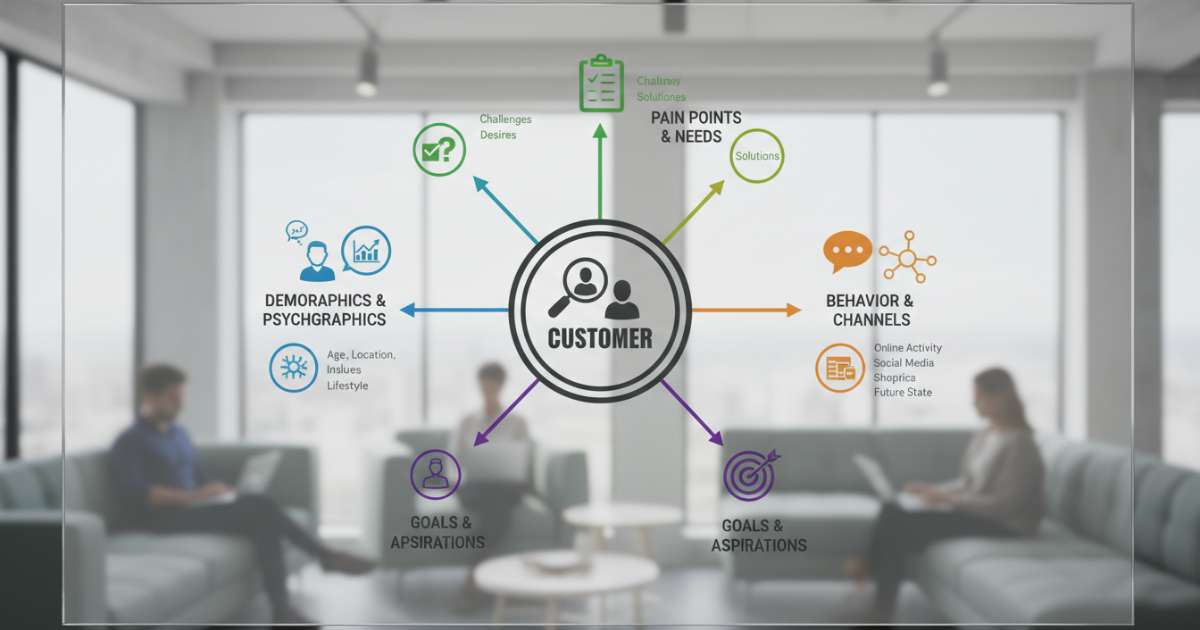
Creating a target customer profile is a structured process that requires looking at both your current successes and your future goals. This profile acts as a fictional representation of your perfect buyer, helping your team visualize who they are talking to. To build an effective target customer profile, you need to gather data from multiple sources and synthesize it into a clear persona. This process should be revisited regularly to ensure it stays aligned with the evolving market landscape.
Analyzing current customer data and feedback
The best place to start defining target customers is with your existing client base. Look at your most profitable and loyal customers to find common patterns. What is their average age? Where do they live? What common problems did they have before using your product? You can use tools like Google Analytics or CRM software to gather this information. Additionally, direct feedback through reviews and customer support interactions can provide qualitative insights into why your target customer chose you over a competitor. This data forms the foundation of your ideal target customer persona.
Conducting thorough market research and surveys
If you are a new business or launching a new product, you may not have enough existing data. In this case, conducting market research is vital. You can distribute surveys to a broad audience to see which segments show the most interest in your value proposition. Focus groups are also an excellent way to dive deeper into the motivations of your potential target customer. By asking open-ended questions, you can discover the language they use and the specific benefits they look for, which helps in crafting a more effective target customer profile.
Studying competitor audience bases
Another effective strategy for defining target customers is to analyze your competitors. Look at who they are targeting in their advertisements and on their social media pages. While you do not want to copy them exactly, understanding their target customer can help you identify gaps in the market. You might find a specific sub-group that the competitor is neglecting, allowing you to position your brand as the better choice for that specific target customer. Analyzing competitor reviews can also reveal what their customers are unhappy about, giving you a chance to solve those issues for your own target audience.
Key variables used to segment a target customer
Market segmentation is the process of dividing a broad market into smaller groups of consumers who have similar needs. To accurately identify your target customer, you must use several segmentation variables. These variables provide a multi-dimensional view of the consumer, allowing for more precise targeting. Most businesses use a combination of demographic, geographic, psychographic, and behavioral factors to refine their target customer profile.
Demographic and geographic segmentation factors
Demographics are the most common way to define a target customer because the data is relatively easy to obtain. This includes age, gender, income level, education, marital status, and occupation. For example, a company selling high-end skincare might focus on women aged 30 to 50 with a high disposable income. Geographic segmentation involves looking at where the target customer is located. This could be as broad as a country or as specific as a neighborhood. Knowing the location of your target customer is essential for businesses that have physical locations or those that need to consider regional preferences and climates.
Psychographic and behavioral segmentation insights
While demographics tell you who buys, psychographics tell you why they buy. This involves studying the personality, values, interests, and lifestyle of your target customer. A target customer for an eco-friendly brand, for instance, might be someone who values sustainability and is willing to pay more for organic materials. Behavioral segmentation looks at the actual actions of the consumer, such as their purchasing habits, brand loyalty, and how they use a product. Understanding whether your target customer is a first-time buyer or a frequent user helps you tailor your marketing messages to their specific stage in the buyer’s journey.
The importance of socio economic status
Socio-economic status is a critical component of the target customer profile as it determines purchasing power. A business must ensure that its pricing strategy aligns with the financial reality of its target customer. If you are selling a luxury service, your target customer must have the means to afford it without hesitation. Conversely, if you are targeting budget-conscious individuals, your messaging should emphasize value for money and affordability. Aligning your product’s price with the expectations of your ideal target customer is vital for maintaining a healthy sales volume.
Common challenges in identifying the right target customer
Identifying a target customer is not always a straightforward task. Many businesses face challenges that can lead them to target the wrong group or to be too vague in their approach. One of the biggest risks is making decisions based on intuition rather than data. Without empirical evidence, you might end up chasing a target customer that does not actually exist or one that is not profitable enough to sustain your business.
Avoiding overly broad market definitions
A frequent mistake is trying to target everyone. Business owners often fear that by narrowing their target customer, they are missing out on potential sales. However, a broad approach usually leads to a weak brand message that fails to connect with anyone. If you try to speak to everyone, your message becomes diluted. It is much more effective to be the number one choice for a specific target customer than to be a secondary choice for a large, indifferent group. Specialization allows you to charge premium prices and build a more loyal following.
Keeping up with changing consumer trends
The target customer of today might not be the same as the target customer of tomorrow. Technology, social shifts, and economic changes can all influence consumer behavior. For example, the rise of remote work has significantly changed the target customer profile for office equipment and professional clothing. Businesses must remain agile and continue to conduct research to ensure their target customer definition remains accurate. Failing to adapt to these changes can result in a brand becoming obsolete as its target audience moves on to newer solutions.
Overcoming internal biases and assumptions
Sometimes, the internal team’s perception of the target customer is clouded by their own biases. They might assume that the target customer thinks and acts just like they do. This can lead to marketing campaigns that use the wrong tone or focus on features that the actual target customer does not care about. To overcome this, it is important to bring in third-party perspectives or rely heavily on data-driven insights. Regularly testing your assumptions through A/B testing can help verify if you are truly reaching the right target customer with the right message.
How to connect with your target customer effectively
Once you have a clear target customer profile, the next step is to find the best ways to communicate with them. Reaching your target customer requires a strategic mix of marketing channels and content that resonates with their specific needs. In the digital age, there are more ways than ever to connect, but the key is to be present where your ideal target customer is most active and receptive to your brand.
Utilizing digital marketing and social media channels
Digital marketing offers powerful tools for reaching a specific target customer. Platforms like Facebook and LinkedIn allow you to run highly targeted ads based on demographics, interests, and behaviors. This ensures that your content is seen by your ideal target customer rather than a random audience. Social media also provides a platform for two-way communication, allowing you to engage with your target customer in real-time. By consistently providing value and responding to inquiries, you can build a strong relationship with your target audience and move them closer to a purchase decision.
Creating high quality content for the target audience
Content marketing is one of the most effective ways to attract your target customer organically. By creating blog posts, videos, or podcasts that solve the problems of your target customer, you establish your brand as an authority in your industry. The key is to focus on topics that your ideal target customer is searching for. When they find your helpful content, they are more likely to trust your brand when they are ready to make a purchase. High-quality content also helps with search engine optimization, making it easier for your target customer to find you when they are looking for solutions online.
Measuring success and refining the strategy
Connecting with your target customer is an ongoing process of measurement and refinement. You should track key performance indicators such as click-through rates, conversion rates, and customer acquisition costs to see how well you are reaching your target customer. If certain campaigns are not performing as expected, it might be a sign that your target customer profile needs adjustment or that your messaging is not hitting the mark. By constantly analyzing the data, you can fine-tune your approach to ensure you are always connecting with your ideal target customer in the most efficient way possible.
Finding the perfect office space is a critical decision for any business looking to impress its target customer and provide a professional environment for its employees. At King Office, we understand that your workspace is a reflection of your brand identity and a tool for your success. We offer a wide range of premium office solutions in prime locations, ensuring that you are always close to your target customer and business partners. Our buildings are equipped with modern amenities and professional management services, allowing you to focus on growing your business while we take care of the infrastructure.
Choosing King Office means joining a community of successful enterprises that value quality and prestige. Whether you need a small private office or a large corporate headquarters, our team is dedicated to helping you find the space that perfectly matches your target customer profile and operational needs. We pride ourselves on our transparent pricing and flexible lease terms, making it easier for you to scale your business in a competitive market. Contact us today to discover how a professional office at King Office can elevate your brand and help you reach your target customer more effectively.
🌐 Website 1: https://thuetoanhahcm.com/
🌐 Website 2: https://www.facebook.com/kingoffice.vn