
In the modern business landscape, understanding your audience is the most critical step toward achieving sustainable growth. A customer persona acts as a detailed guide that helps businesses identify exactly who their potential buyers are, what they need, and how they make purchasing decisions. By creating a customer persona, companies can move away from broad marketing tactics and focus on personalized experiences that resonate with specific individuals. This strategic approach ensures that every marketing dollar spent is an investment toward attracting the right people who are most likely to convert into loyal clients.
The concept of a customer persona is not just a theoretical exercise for the marketing department. It is a practical tool that influences product development, sales techniques, and customer service protocols. When a business has a clear buyer persona, it can communicate more effectively, solve real problems for its audience, and build a brand that people trust. In this comprehensive guide, we will explore the nuances of building an ideal customer profile and how to integrate these insights into your overall marketing strategy to achieve superior results.
Defining the role of a customer persona in business

A customer persona is a semi-fictional representation of your ideal client based on real data and educated speculation about demographics, behavior patterns, motivations, and goals. It goes beyond simple statistics like age or location by diving deep into the psychology of the buyer. When you develop a customer persona, you are essentially putting a human face on a segment of your target audience, making it easier to empathize with their challenges and needs.
Having a well-defined buyer persona allows your team to align their efforts. Instead of guessing what might work, the sales and marketing teams can refer to the customer persona to craft messages that speak directly to the frustrations and aspirations of the consumer. This alignment is crucial for maintaining a consistent brand voice across all platforms. Whether you are writing a blog post or designing a new product feature, the customer persona serves as the ultimate benchmark for relevance.
Furthermore, an ideal customer profile helps in identifying which leads are worth pursuing. Not every person who visits your website is a good fit for your services. By using a customer persona, you can filter out low-quality leads and focus your energy on individuals who provide the highest lifetime value. This level of precision is what separates successful enterprises from those that struggle to find a foothold in a competitive market.
The core components of a customer persona
To build a high-quality customer persona, you must collect various types of information. First, look at demographic data such as age, gender, income level, and education. This provides a basic framework of who the person is. Next, explore psychographic details, which include their values, interests, and lifestyle choices. Understanding what a person values helps in creating a marketing strategy that aligns with their personal beliefs.
Another essential component is behavioral information. This involves looking at how the target audience interacts with your brand, what social media platforms they use, and their typical buying journey. By analyzing these behaviors, you can identify the best channels to reach your customer persona. Finally, identify their pain points and goals. Knowing what keeps your customers up at night allows you to position your product as the perfect solution to their problems.
The importance of a buyer persona for marketing success

The primary reason why a customer persona is vital is that it enables personalization at scale. In an era where consumers are bombarded with thousands of advertisements daily, only the most relevant messages stand out. A buyer persona allows you to tailor your content, advertisements, and email campaigns to the specific interests of different groups within your target audience. This relevance leads to higher engagement rates and better conversion statistics.
Using a customer persona also improves the efficiency of your marketing strategy. Instead of wasting resources on broad campaigns that reach people who have no interest in your product, you can direct your budget toward specific segments. This targeted approach reduces the cost of customer acquisition and increases the return on investment. When you know exactly who your ideal customer profile is, you can choose the right keywords, the right tone of voice, and the right timing for your outreach.
Moreover, customer insights derived from persona research can drive innovation. When you understand the unmet needs of your customer persona, you can develop new features or services that directly address those gaps. This proactive approach to product development ensures that your business remains competitive and continues to provide value to its target audience. It transforms the business from being product-centric to being customer-centric.
Enhancing customer experience through personas
A customer persona is also a powerful tool for improving the customer experience. When your support team understands the typical challenges faced by a specific buyer persona, they can provide more empathetic and effective assistance. This leads to higher levels of customer satisfaction and brand loyalty. People are more likely to return to a business that makes them feel understood and valued.
By mapping the journey of each customer persona, you can identify potential friction points in the buying process. For example, if your ideal customer profile is someone who is tech-savvy but short on time, a complicated checkout process will likely lead to cart abandonment. Recognizing these traits allows you to streamline the user experience to match the expectations of your target audience, ensuring a smooth transition from lead to customer.
Practical steps to build a detailed customer persona
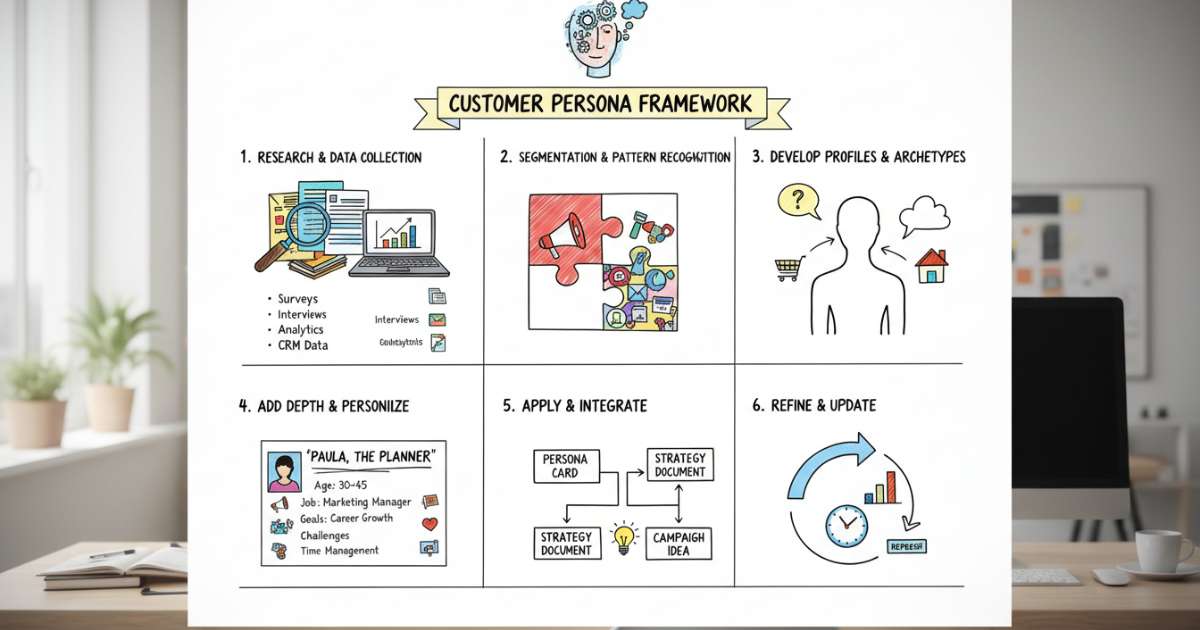
Creating a customer persona requires a combination of internal data analysis and external research. The first step is to look at your existing customer base. Use your CRM system and website analytics to find patterns in who is currently buying from you. Look for commonalities in their job titles, industry, and the type of content they consume. This data provides a solid foundation for your buyer persona.
Next, conduct interviews and surveys with both current and prospective customers. Asking direct questions about their challenges, goals, and how they discovered your brand provides invaluable customer insights. It is important to talk to people who decided not to buy from you as well, as their feedback can reveal weaknesses in your marketing strategy or product offering. These conversations help fill in the gaps that data alone cannot explain.
Once you have gathered enough information, look for trends and group them into distinct categories. Most businesses will have more than one customer persona. For instance, a software company might have one persona for the technical user and another for the executive decision-maker. Give each buyer persona a name and a narrative to make them feel like a real person. This makes it easier for your team to visualize who they are working for.
Gathering data for your ideal customer profile
- Review web analytics: Use tools to see where your traffic comes from and what pages are most popular among your target audience.
- Analyze social media engagement: Observe which posts get the most interaction and what kind of language your followers use.
- Internal team feedback: Talk to your sales and customer service teams, as they interact with the customer persona every day and know their frequent complaints.
- Conduct focus groups: Bring together a small group of people who match your ideal customer profile to get deep qualitative feedback.
- Market research reports: Use industry data to understand broader trends affecting your target audience.
How a customer persona differs from target audience segmentation

While the terms are often used interchangeably, there is a distinct difference between customer segmentation and a customer persona. Segmentation is the process of dividing a large market into smaller groups based on broad characteristics like geography or industry. It is a top-down approach that focuses on categories. On the other hand, a customer persona is a bottom-up approach that focuses on the individual within those segments.
Customer segmentation tells you who the groups are, but a customer persona tells you why they behave the way they do. For example, a segment might be female business owners in the city. A customer persona within that segment would be a specific person who values work-life balance and is looking for tools to automate her daily tasks. The persona provides the emotional and psychological context that a segment lacks.
Using both customer segmentation and personas together creates a powerful marketing strategy. You use segmentation to identify the size and viability of a market, and then you use the customer persona to craft the actual messaging that will convert those individuals. This dual approach ensures that your marketing is both broad enough to reach a large audience and specific enough to be effective.
Why segmentation alone is not enough
Relying solely on customer segmentation can lead to generic marketing that fails to connect with anyone on a deep level. Without the customer insights provided by a persona, your brand might appear cold or out of touch. People do not want to be treated like a demographic; they want to be treated like individuals with unique needs. A buyer persona bridges this gap by allowing for human-centric communication.
Furthermore, customer segmentation often ignores the motivations behind a purchase. Two people in the same demographic segment might buy the same product for completely different reasons. One might buy a luxury watch as an investment, while another buys it as a status symbol. A customer persona helps you understand these underlying motivations, allowing you to tailor your sales pitch to match the specific desires of the ideal customer profile.
Applying customer insights to enhance your marketing strategy

Once you have established your customer persona, the next step is to integrate it into every facet of your marketing strategy. Start by auditing your current content. Does your blog, social media, and website copy speak directly to the needs of your buyer persona? If not, it is time to rewrite your messaging to ensure it addresses their specific pain points and uses the language they are comfortable with.
In digital advertising, use your customer persona to refine your targeting options. Platforms like Facebook and LinkedIn allow you to target users based on interests, job titles, and behaviors that match your ideal customer profile. This ensures that your ads are seen by the people most likely to be interested in your offer, thereby increasing your click-through rates and lowering your costs.
Email marketing also benefits greatly from a customer persona. Instead of sending the same newsletter to everyone, segment your list based on your personas and send tailored content to each group. This level of personalization makes your subscribers feel like you are speaking directly to them, which significantly boosts open and conversion rates. Using customer insights to personalize the subject line and the offer can make a massive difference in your campaign performance.
Building a content plan around your buyer persona
A successful marketing strategy relies on providing value at every stage of the buyer journey. Use your customer persona to determine what kind of content they need when they are just becoming aware of a problem, when they are considering different solutions, and when they are ready to make a purchase. For example, a customer persona in the awareness stage might need educational blog posts, while someone in the decision stage might need case studies or product demos.
By mapping content to the buyer persona journey, you can lead prospects through the sales funnel more effectively. You are not just pushing a product; you are acting as a helpful guide that provides the right information at the right time. This builds trust and positions your brand as an authority in the eyes of your target audience. Consistent, persona-driven content is the key to long-term brand building and customer retention.
Avoiding common pitfalls when creating an ideal customer profile
One of the most common mistakes when building a customer persona is relying too heavily on assumptions. If you create a persona based on what you think your customers are like, rather than actual data, you risk building a marketing strategy on a flawed foundation. Always validate your theories with real customer insights from interviews, surveys, and analytics. A persona should be a reflection of reality, not a work of fiction.
Another pitfall is creating too many personas. While it is true that your business might serve different types of people, having fifteen different personas can lead to a fragmented and confusing marketing strategy. It is better to focus on three to five core personas that represent the majority of your revenue. This allows your team to maintain focus and deliver high-quality, targeted campaigns without becoming overwhelmed.
Finally, remember that a customer persona is not a static document. The market changes, technology evolves, and consumer preferences shift over time. If you do not regularly update your buyer persona, it will eventually become obsolete. Make it a habit to review your ideal customer profile every year and adjust it based on new data and feedback. Staying in tune with your target audience is an ongoing process that requires constant attention.
Keeping your customer persona realistic and useful
To ensure your customer persona remains a useful tool, keep the descriptions concise and actionable. Avoid adding unnecessary details that do not influence the buying process. Focus on the information that helps your team make better decisions. For instance, knowing their favorite color might not be useful for a B2B software company, but knowing their preferred method of professional communication is essential.
Share the customer persona documents with everyone in the company, not just the marketing team. When the product developers, sales representatives, and customer support staff all understand the ideal customer profile, the entire organization becomes more aligned. This holistic approach ensures that every touchpoint a customer has with your brand is consistent and tailored to their needs, leading to a much stronger market position.
Finding the right environment to grow your business is just as important as knowing your customer persona. At King Office, we provide premium office spaces that allow you to focus on your marketing strategy and business operations in a professional setting. Our locations are designed to foster productivity and provide the prestige your brand deserves when meeting with clients who match your ideal customer profile.
Choosing King Office means choosing a partner in your professional journey. Whether you are a startup refining your first buyer persona or an established enterprise expanding your target audience, our flexible leasing options and top-tier facilities provide the perfect foundation for success. Contact us today to find a workspace that aligns with your professional goals and helps you reach your full potential.
🌐 Website 1: https://thuetoanhahcm.com/
🌐 Website 2: https://www.facebook.com/kingoffice.vn